Sete monumentos e sítios históricos localizados nos municípios da província do Zaire foram propostos, pelas autoridades, para lista de património cultural nacional, deu a conhecer o chefe do museu dos Reis do Kongo, Lutandila Lunguana. Segundo o chefe do museu dos Reis do Kongo, trata-se das grutas do Nzau-Évua e das Gravuras Rupestres da aldeia do Lombo, no município de Mbanza Kongo, das Quedas do rio Mbridje e suas grutas (Cuimba), da pedra sobre pedra na comuna da Musserra (Nzeto), do palácio colonial do administrador (Nóqui) e do Porto Rico, município do Soyo.
On the 50th anniversary of the Earth Day on April 22nd, the AA launches an open call for submissions of drawings that depict the earth today. At a time when the planet is united in the experience of combatting the COVID-19 pandemic, we are physically separated while digitally connected. How does this impact the way we visualise Earth as a whole? From the Cantino Planisphere to Buckminster Fuller’s dymaxion map to one of the oldest maps – the Bedolina Petroglyphs – we image the Earth as a way of better understanding our identity and relationship to one another.
Source: AA . Architectural Association School of Architecture
NASA Television will provide live coverage of the launch and docking of a Russian cargo spacecraft delivering almost three tons of food, fuel, and supplies to the International Space Station beginning at 9:30 p.m. EDT Friday, April 24.
The uncrewed Russian Progress 75 is scheduled to launch on a Soyuz
rocket at 9:51 p.m. (6:51 a.m. Saturday, April 25, Baikonur time) from
the Baikonur Cosmodrome in Kazakhstan.
The spacecraft is expected to dock to the Earth-facing port of the
Zvezda Service Module on the station’s Russian segment at 1:12 a.m.
Saturday, April 25. NASA TV coverage of rendezvous and docking will
begin at 12:30 a.m.
Progress 75 will remain docked at the station for more than seven
months, departing in December for its deorbit into Earth’s atmosphere.
For almost 20 years, humans have lived and worked continuously aboard the International Space Station, advancing scientific knowledge and demonstrating new technologies, making research breakthroughs not possible on Earth. As a global endeavor, 239 people from 19 countries have visited the unique microgravity laboratory that has hosted more than 2,800 research investigations from researchers in 108 countries.
Fifty years ago, on April 22, 1970, people around the globe marked
the first Earth Day. On this Earth Day, as we physically separate
ourselves by necessity, we can still collectively appreciate the
wondrous beauty of our planet and the extraordinary science that helps
us understand how it all works – and we can do it from our homes.
This classic photograph of the Earth was taken on Dec. 7, 1972, by
the crew of Apollo 17. The original caption is reprinted below:
View of the Earth as seen by the Apollo 17 crew traveling toward the
moon. This translunar coast photograph extends from the Mediterranean
Sea area to the Antarctica south polar ice cap. This is the first time
the Apollo trajectory made it possible to photograph the south polar ice
cap. Note the heavy cloud cover in the Southern Hemisphere. Almost the
entire coastline of Africa is clearly visible. The Arabian Peninsula can
be seen at the northeastern edge of Africa. The large island off the
coast of Africa is the Malagasy Republic. The Asian mainland is on the
horizon toward the northeast.
As grandes transformações mundiais causadas pela pandemia da Covid-19 são o tema da próxima exposição de pintura de Don Sebas Cassule.
O artista, vencedor do Prémio Nacional de Cultura e Artes de 2019, na categoria Artes Visuais e Plásticas, disse que vai usar a originalidade da adaptação dramática e o impacto da Covid-19 na produção artística mundial, num trabalho a ser apresentada ao público ainda este ano. O pintor pretende criar um cenário artístico assente numa análise profunda, penosa, amarga e dolorosa da história do “dia seguinte” da pandemia e como esta alterou o “modo de vida” de toda a humanidade.
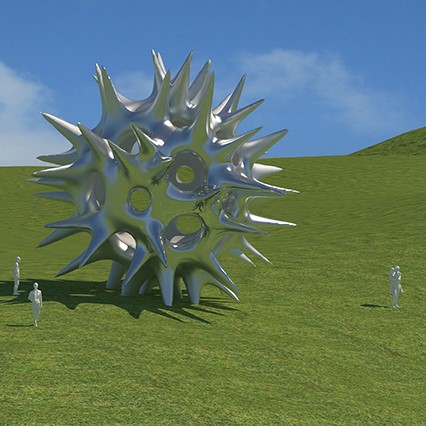
A crise vai passar, mas a memória não. O mundo não esquecerá por muito tempo este instante particularmente doloroso e nefasto na história da nossa civilização. A arte tem também a função de construir memórias. Desde o início do século Leonel Moura tem desenvolvido algoritmos que geram de forma autónoma formas que se assemelham a vírus e pequenos organismos correntes na natureza. Aliás, 17 deles encontram-se espalhados por Lisboa numa versão em Realidade Aumentada (ver aqui). Agora escolheu um deles para produzir uma escultura de grande dimensão e durabilidade, realizada em Titânio, para assinalar a pandemia. Um pequeno grupo de trabalho foi criado para procurar a sua implementação que deverá ter como destino uma cidade europeia.
Human eyes can see only a small portion of the range of radiation
given off by the objects around us. We call this wide array of radiation
the electromagnetic spectrum, and the part we can see visible light.
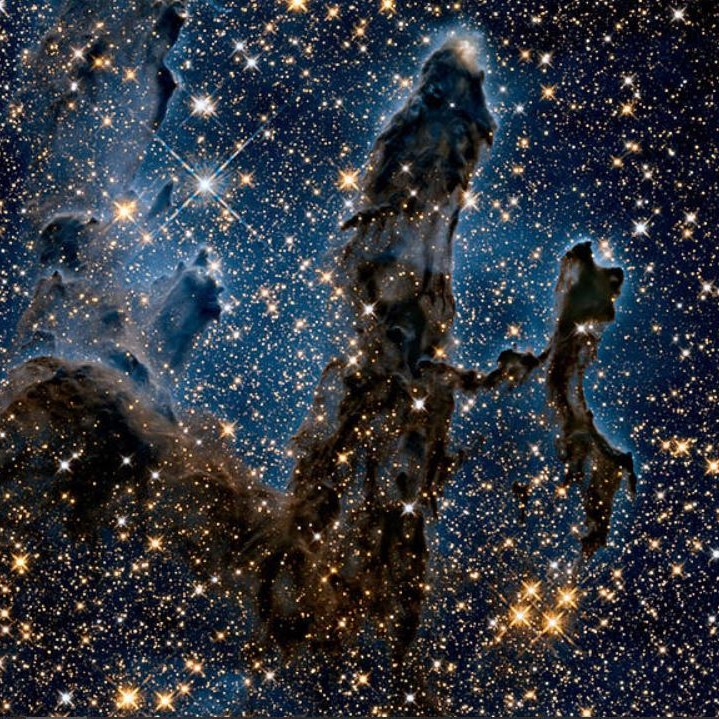
In this Hubble Space Telescope image, researchers revisited one of Hubble’s most iconic and popular images: the Eagle Nebula’s Pillars of Creation.
Here, the pillars are seen in infrared light, which pierces through
obscuring dust and gas and unveil a more unfamiliar — but just as
amazing — view of the pillars. The better-known image is of the
pillars in visible light.
In this ethereal view the entire frame is peppered with bright stars
and baby stars are revealed being formed within the pillars themselves.
The ghostly outlines of the pillars seem much more delicate, and are
silhouetted against an eerie blue haze.
Este artigo é um exercício de observação e análise das diferentes formas de ocupação e uso do solo em tecidos urbanos informais ou autoproduzidos nos arredores de Luanda, e sua relação com o centro urbano consolidado da capital angolana.
Luanda, com quase 10 milhões de habitantes, um terço da população de Angola, viu sua infraestrutura ficar defasada em relação ao vertiginoso crescimento urbano resultado do êxodo rural. O aumento da população gerou bairros informais, musseques, espraiados horizontalmente, sem quaisquer plano de ocupação, que gravitam em torno do centro urbano.