Dez 22

Stellar Jewel Box

Thousands of sparkling young stars are nestled within the giant nebula NGC 3603, one of the most massive young star clusters in the Milky Way Galaxy.

NGC 3603, a prominent star-forming region in the Carina spiral arm of the Milky Way about 20,000 light-years away, reveals stages in the life cycle of stars.

Powerful ultraviolet radiation and fast winds from the bluest and hottest stars have blown a big bubble around the cluster. Moving into the surrounding nebula, this torrent of radiation sculpted the tall, dark stalks of dense gas, which are embedded in the walls of the nebula. These gaseous monoliths are a few light-years tall and point to the central cluster. The stalks may be incubators for new stars.

On a smaller scale, a cluster of dark clouds called “Bok” globules resides at the top, right corner. These clouds are composed of dense dust and gas and are about 10 to 50 times more massive than the sun. Resembling an insect’s cocoon, a Bok globule may be undergoing a gravitational collapse on its way to forming new stars.

The nebula was first discovered by Sir John Herschel in 1834.

Source: NASA

Dez 21

Carla Andrino

Troufa Real com a actriz Carla Andrino

Dez 18

Percursos da pintura em mostra no Camões

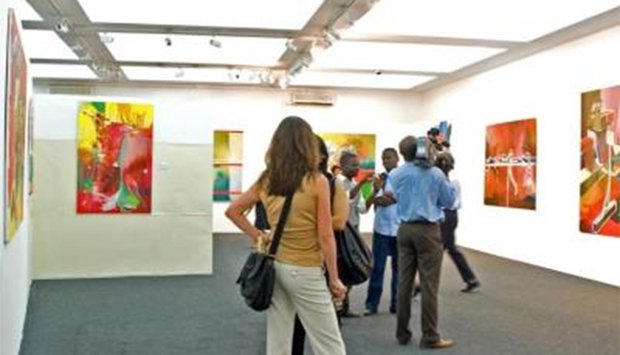
O Camões–Centro Cultural Português, em Luanda, apresenta a exposição de pintura “Percursos da Pintura Angolana – Visita ao Acervo do Camões…”, que vai ficar patente ao público até finais do próximo mês de Janeiro.

São 37 obras emblemáticas seleccionadas do Acervo do Camões–CCP Luanda, realizadas por 19 artistas angolanos que têm marcado a evolução da arte contemporânea em Angola.Entre as obras expostas, constam trabalhos de Mestre Kapela, António Ole, Paulo Jazz, Álvaro Macieira, Jorge Gumbe, Francisco Van-Dúnem, Isabel Baptista, Dom Sebas Cassule, Paulo Amaral, Christiano Mangovo, Paulo Kussy, Fineza Teta, Guilherme Mampuya e Thó Simões.

Fonte: Jornal de Angola

Dez 17

Constança

Dez 16

Quasars Rip Across Galaxies Like Tsunamis

Using the unique capabilities of NASA’s Hubble Space Telescope, a team of astronomers has discovered the most energetic outflows ever witnessed in the universe. They emanate from quasars and tear across interstellar space like tsunamis, wreaking havoc on the galaxies in which the quasars live.

This illustration shows a distant galaxy with an active quasar at its center. A quasar emits exceptionally large amounts of energy generated by a supermassive black hole fueled by infalling matter. Using the unique capabilities of Hubble, astronomers have discovered that blistering radiation pressure from the vicinity of the black hole pushes material away from the galaxy’s center at a fraction of the speed of light. The “quasar winds” are propelling hundreds of solar masses of material each year. This affects the entire galaxy as the material snowplows into surrounding gas and dust.

Source: NASA

Dez 15

Candidaturas abertas à 6.ª edição do Prémio Literário UCCLA – Novos Talentos, Novas Obras em Língua Portuguesa

Estão aberturas as candidaturas à 6.ª edição do Prémio Literário UCCLA – Novos Talentos, Novas Obras em Língua Portuguesa até ao dia 31 de janeiro de 2021.

O Prémio Literário UCCLA tem como objetivo estimular a produção de obras literárias, nos domínios da prosa de ficção (romance, novela, conto e crónica) e da Poesia, em língua portuguesa, por novos talentos de escritores. Ao concurso só pode concorrer quem nunca editou uma obra literária e poderá enviar uma única obra a concurso.

Regulamento

Fonte: UCCLA

Dez 14

A Kibala dos meus olhos

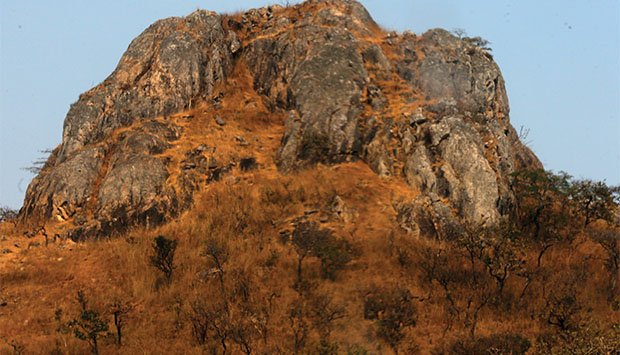
Edifícios em escombros tornaram-se o cartão de visita da “cidade” de Kibala (Cuanza-Sul). A guerra pós independência pôs tudo abaixo e o que resta são escombros e edifícios fortemente estropiados.
Kibala é um entroncamento em forma de X, tendo à direita (sentido Luanda-Huambo) a estrada que nos leva à Gabela e ao Sumbe, capital da província do Cuanza-Sul. À esquerda, apresenta-se a estrada que nos leva ao Mussende e Malanje. Em direcção ao Sul está a rodovia que nos leva ao Dondo e Luanda e a Norte a que nos leva ao Waku Kungo e ao Huambo, passando por Katofe que era, à época, uma mui crescente vila agrícola que estava a ser erguida por camponeses madeirenses (Portugal) ali aportados em princípios da década de 60 (Sec. XX). Katofe fica a aproximadamente 10 quilómetros de Kibala e está hoje em escombros. Tenta se reerguer com muito custo, acolhendo já uma escola técnica de agricultura e outras serventias.

Fonte: Jornal de Angola

Dez 13

Homenagem ao 93º aniversário de Marianne Peretti

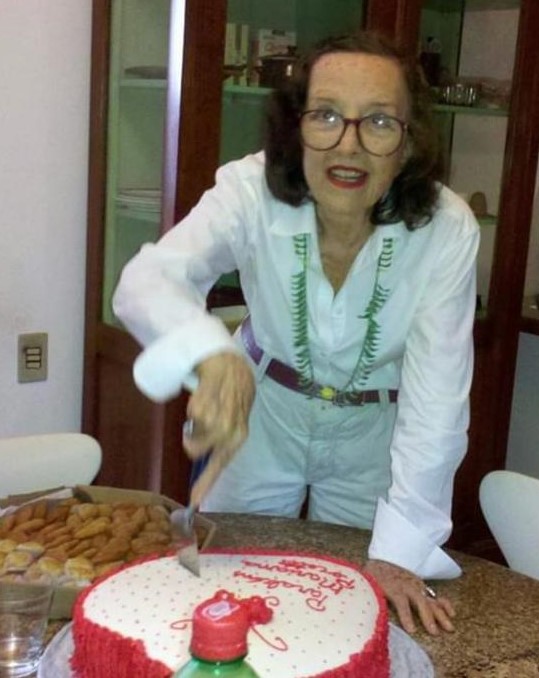
A Fundação Troufa Real-Ukuma  e toda a sua equipa enviam os mais calorosos parabéns à Artista Plástica Marianne Peretti, neste dia de aniversário, com desejo de boa saúde e vida longa.

Dez 11

The law of withdrawal

Aristide Antonas

The idea of protocols of withdrawal seems to refer to the condition of the pandemics but it is not so. On the contrary it leads here to a definition of the city’s normality pre-existing the pandemics and addressing the future after it; through an investigation about urban withdrawal we are oriented towards a systematic theory of the infrastructure; an updated concept of infrastructure -including the realm of the post digital extensions of it- becomes increasingly visible as a mechanism of withdrawal. Providing services and goods from a distance, this infrastructure can settle a form of “life from a distance”; in the same way it automatically silences all possible technical malfunctions operated in its realm, it glorifies a concept of permanent maintenance as the core of its rationale. By tele-operation this silencing effect of the infrastructure becomes even stronger as a permanent possibility for the gratification of all possible urban or post-urban needs. In this sense the infrastructure seems to not only be the technical support of urban life but the unifying spine of its multiple faces. Any concept of the political has to deal now with the automatisms of infrastructure.

Projective Cities – Virtual Athens Trip
Date:Thursday 17 December 2020
Time:18:00

Register to attend

Source: AA School of Architecture

Artigos mais antigos «

» Artigos mais recentes